Sativa, indica, or hybrid: these are the terms you encounter everywhere as soon as you delve into cannabis. But what is the real difference, and when should you choose sativa or indica? In this article, we will calmly explain the characteristics and effects to make it easier for you to choose the strain that suits you. It is not an exact science, but a few rules of thumb will get you a long way.
Sativa, indica and hybrid: the basics
Cannabis has traditionally been classified into two main types: sativa and indica. They differ in appearance, growth habit, and especially in effect. A hybrid is a cross between these two, and it is precisely these crosses that make up the largest part of the supply today.
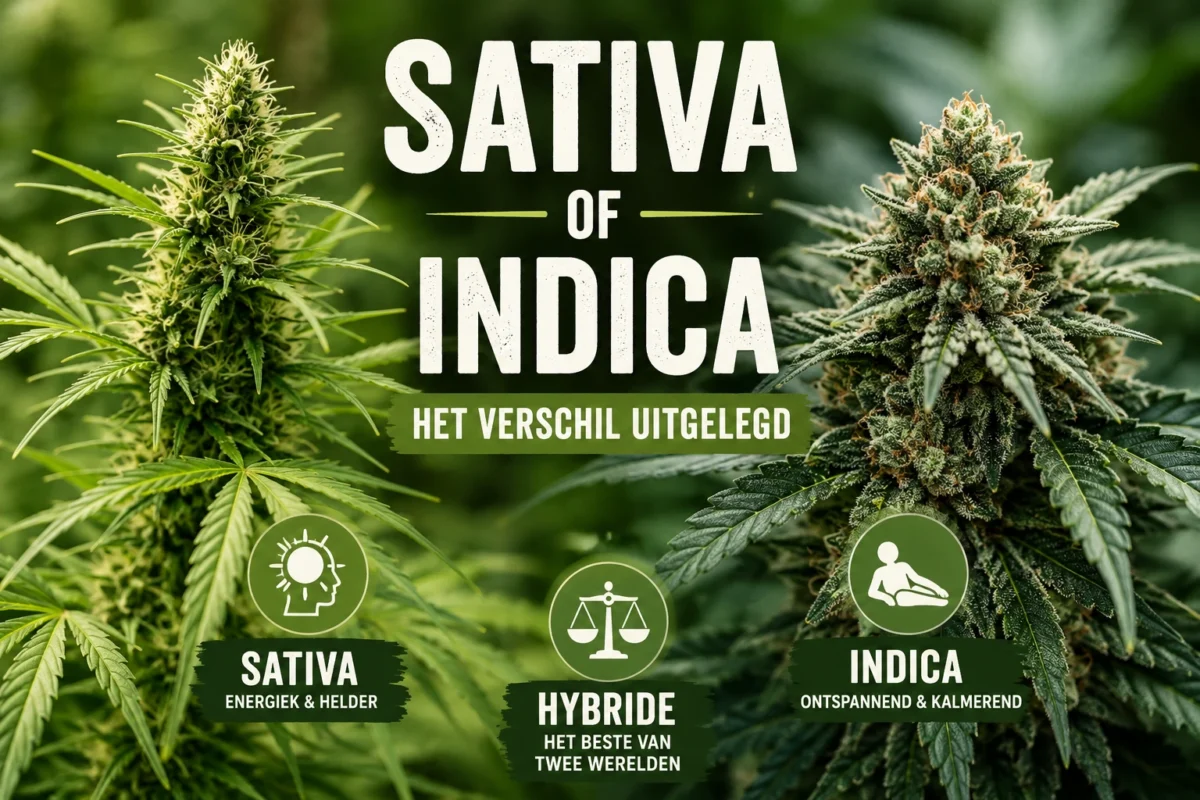
The idea is simple. Sativa is known for an energetic, uplifting effect, indica for a relaxing, calming effect, and a hybrid sits somewhere in between. In practice, that distinction becomes somewhat blurred, as almost all modern strains are hybrids. Nevertheless, the label helps you get started, so we will go through the three types below.
Sativa: energetic and clear
Sativa strains typically produce a clear, uplifting high that is primarily in your head. Many people experience them as social and creative, ideal for daytime or for moments when you want to stay active and sharp.
Well-known examples are Lemon Haze and Amnesia Haze. Do you identify with an energetic, fresh high that doesn't pin you down on the couch? Then a sativa is often a good match.
Indica: relaxing and calming
Indica strains work the other way around. The high is more in your body and feels heavy and relaxing, making them suitable for the evening or for unwinding.
A classic example is Northern Lights. Are you looking for something to unwind with after a long day, or to fall asleep more easily? Then an indica usually suits that better than a sativa.
Hybrid: the best of two worlds
A hybrid combines characteristics of sativa and indica. Depending on the ratio, such a strain leans more towards one side or the other, or strikes a nice balance.
White Widow is a fine example of a balanced hybrid: first a clear high, followed by pleasant relaxation. This makes hybrids versatile and a pleasant, reliable choice for many people.
Sativa or indica: how do you choose?
The easiest rule of thumb: if you want energy and focus during the day, think sativa. If you want relaxation or better sleep, look at indica. If you are unsure, or want something in between, a hybrid is a logical choice.
Also pay attention to the THC content and your own experience. Just starting out? Then choose a milder strain and build up gradually. View the full range in our weed shop, or compare strains in the weed strains overview.
Does the distinction always matter?
More and more connoisseurs find the strict classification between sativa and indica too simplistic. The actual effect depends heavily on the terpenes and the THC and CBD content of a specific strain, not just on the type.
So use the label as a handy starting point, but also look at the characteristics of the strain itself. In our guides, you will find the THC content, effects, and flavor for each strain, so you can always make an informed choice.
Misunderstandings about sativa and indica
The most persistent misconception is that the label determines everything. In reality, sativa or indica says something about the origin and the general direction of the effect, but two sativas can differ significantly from one another. One makes you primarily creative and clear-headed, the other rather restless.
A second misconception is that indica is always heavier. That is not true: a light indica can turn out milder than a strong sativa. Therefore, always look at the specific strain and the THC content, and not just the type of sativa or indica.
Frequently asked questions about sativa and indica
Sativa usually produces an energetic, clear high that is primarily in your head, while indica produces a heavier, relaxing effect in your body. Therefore, Sativa is better suited for the day and indica for the evening.
Strength does not depend on the type, but on the THC content of the specific strain. Both a sativa and an indica can be strong or mild.
For daytime, you usually choose a sativa, because it has an energetic and uplifting effect. An indica tends to make you lethargic and is better suited for a quiet evening.
A hybrid is a cross between a sativa and an indica. Depending on the ratio, the strain leans more towards the energetic or the relaxing side, or strikes a balance.
First, determine what you are looking for: energy and focus, or relaxation. Then, look at the THC content and, as a beginner, start with a milder strain. In our guides, you will find all the information for each strain, so you can make an informed choice between sativa or indica, or opt for a hybrid.